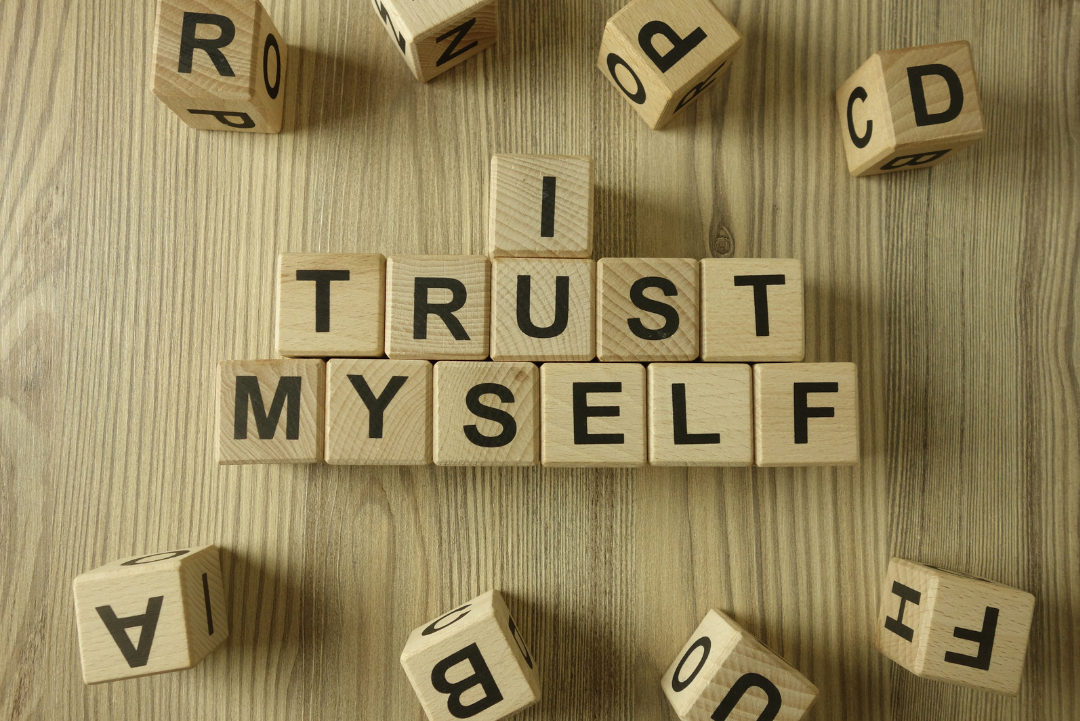
Rebuilding Self-Trust Without Alcohol
A while ago, I made a small change that ended up having a much bigger impact than I expected. I stopped wearing my smart watch.
For years it sat on my wrist tracking everything. Steps, sleep, heart rate, stand reminders, movement alerts, notifications and messages. At first it felt helpful. Productive, even. Like I was doing a good job of staying on top of my health and daily habits.
But I started to feel overwhelmed with all the notifications. The little buzzes throughout the day were subtle but relentless. Stand up. Move more. Your heart rate has changed. You have closed a ring. You have not closed a ring. Another message. Another prompt to check something.
Without really noticing it, I had started looking outside myself for signals about how I was doing.
Learning to hear myself again
When I stopped wearing it, the noise disappeared and in that quiet, something interesting happened. I realised I could feel many of the things I had been waiting for it to tell me.
I knew when I needed to move. I could sense when I had been sitting too long. I could feel when I was tired, when I needed fresh air, or when my mind needed a break. I did not need a notification to remind me to get up and go for a walk with Sadie. My body already knew.
And it struck me that this shift had a lot to do with living alcohol-free.
You might recognise the feeling of saying you will only have one drink and then having three. Or telling yourself you will not drink on a weeknight and then doing it anyway. The next morning, you feel frustrated or disappointed, quietly questioning why you cannot seem to stick to what you told yourself you would do.
Those experiences can chip away at the relationship you have with yourself. But struggling to change your drinking does not make you a failure, and being harder on yourself is not the only way forward.
For me, taking alcohol out of the picture created room to notice what I was feeling rather than immediately looking for a way to switch off. Over time, the constant push and pull between what I said I would do and what I actually did began to quieten.
Start with a promise you can realistically keep
You say you are not drinking tonight and you keep that promise. Each small decision can give you a little more confidence in your ability to listen to yourself and follow through.
That does not mean you need to become a completely different person by next Tuesday. When I stopped drinking, there were days when staying alcohol-free was enough. I did not need to fix every part of my life at the same time.
If you want to practise rebuilding self-trust, choose one manageable commitment rather than an ambitious list. It might be taking a short walk when you have been sitting all day, saying no to something you genuinely do not have the energy for, or asking someone for support rather than pretending everything is fine.
Make it specific enough that you know what you are agreeing to. "I will go outside for ten minutes after lunch" is easier to follow through on than "I will look after myself better". Choose something that supports you, rather than another task you think you should be doing.
Then notice it when you do it. A promise kept does not need to be impressive to count.
Look for progress beyond your alcohol-free day count
When I reflect on what has changed since I stopped drinking, it is not just better sleep or clearer mornings. It is the relationship I now have with myself.
There is a steadiness there that did not exist before. A quiet sense that I can listen to my body, trust my instincts and make decisions that support the life I want to live.
I started speaking up more. Saying no without explaining myself. Backing myself in ways I never had before. Those changes deserve attention alongside the number of days.
If counting days helps you, you do not have to stop. Just give yourself a little more to notice. At the end of the week, try writing down your answers to these questions:
When did I listen to what I needed rather than automatically pushing through?
What small commitment did I follow through on?
How did I handle a difficult moment differently?
What have I learnt about myself that a day count cannot tell me?
Keep the answers ordinary and honest. Perhaps you asked for help sooner. Perhaps you left an event when you were tired. Perhaps you noticed an uncomfortable feeling without immediately trying to get rid of it.
You are looking for your own examples, not trying to prove that everything is better.
A difficult day does not have to become a verdict
Self-trust does not require perfection. If something does not go as planned, you can look at what happened without turning it into a judgement about who you are.
Was the commitment too big? Were you exhausted? Did you need more support than you had allowed yourself?
Then ask the question I come back to: "What would support me today?"
It might be a smaller next step, an earlier night or an honest conversation. You can adjust a plan and still take yourself seriously.
If this brings up a deeper feeling that you are not good enough, Rebuilding Self-Worth Without Alcohol explores that part of the journey. Your worth does not depend on how successfully you complete a list of habits.
You do not have to work this out alone
This is one of the reasons I love supporting women as they change their relationship with alcohol. There is room to reconnect with themselves, hear their own signals and notice what they actually need.
If you would like company and support as you work this out, you can find out more about The Hub Membership.
For me, one of the most meaningful changes has been realising I can trust myself again. That trust has grown through small, everyday decisions, with plenty of room to keep learning.
By: Caitlin Behrens
